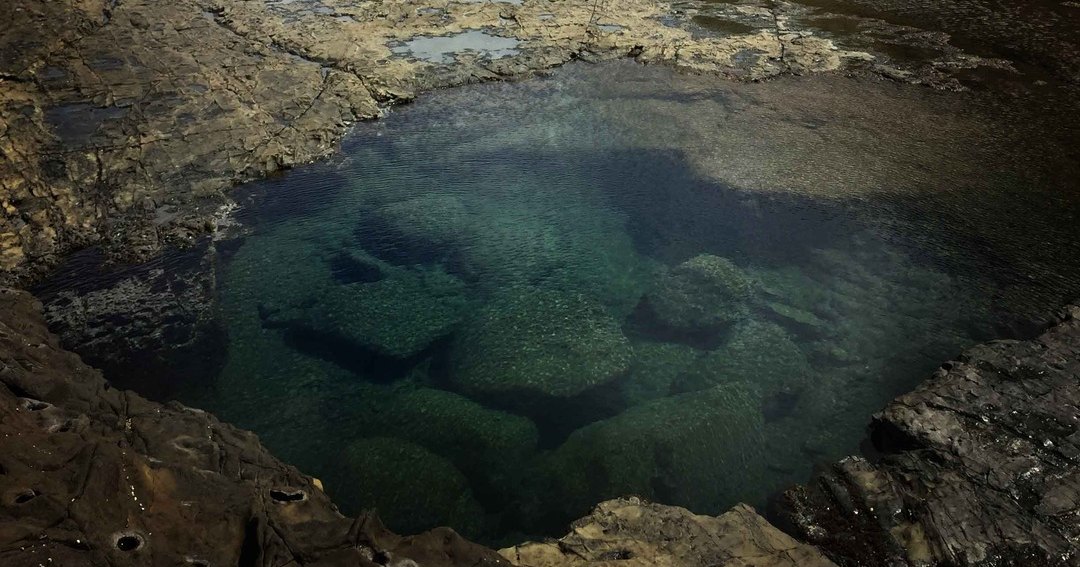
El Tránsito is the kind of place where the day's plan gets decided by the tide. This small fishing village on Nicaragua's Pacific coast has 1.7 kilometres of dark volcanic sand, and at both ends of the beach the rock has been carved into shallow basins that fill and empty twice a day. They're free, they're a one-minute walk from the sand, and on a weekday morning you'll often have them entirely to yourself.
Here's how to make the most of the tide pools and the wildlife around them — slowly, and without needing a car.
Why the tide pools are the quietest thing in El Tránsito
Most people come to this coast for the waves. The pools are what you do when you'd rather not paddle out: warm, clear basins in the volcanic rock, deep enough to sit in, with the surf breaking a few metres away. Because the rock is dark and the water is shallow, the pools warm up quickly in the sun — bathwater by early afternoon. This isn't a resort amenity or a paid excursion. It's just the coast doing what it has always done, and it's one of the reasons couples who want a genuinely quiet beach keep choosing El Tránsito over the busier surf towns.
Time your visit around low tide
The single most useful thing you can do is check a tide table for El Tránsito before you set out. Aim for the hour either side of low tide, when the water pulls back and the pools are fully revealed. At high tide the same rocks disappear under the swell and the pools become whitewater.
Two more things worth knowing:
- Bring water shoes. The volcanic rock is uneven and sharp in places. Sandals you can get wet are fine; bare feet are not.
- Go early or late. Morning light is soft, the beach belongs to the fishermen, and the heat hasn't arrived yet. The last hour before sunset is the other sweet spot — and it's when the whole village drifts down to the sand to watch the sun drop.
What you'll actually see in the pools
Look closely, then sit still for a few minutes. Small fish get trapped in the basins as the tide falls and dart for cover when your shadow passes over them. Hermit crabs work along the edges, tiny crabs scuttle sideways across the wet rock, and anemones and barnacles cover the surfaces below the waterline. These pools are wild, not curated — no railings, no queue, no entry fee. Treat the sea the way the locals do: watch the swell, keep an eye on the rising water, and don't turn your back on the surf.
Poza La Perla: the bigger pool up the coast
A short walk or drive north of the village brings you to Poza La Perla, a larger natural pool formed in the volcanic shoreline. It's wide enough to wade in properly, the water is remarkably clear, and if you bring a snorkel mask you'll find small reef fish moving between the rocks. Local families come out here at weekends; on a weekday you might have it to yourself.
A beach walk with birds, boats and tracks in the sand
You don't need to go anywhere specific to see wildlife here — the walk is the activity. Step out of Casa Todo Bueno early and you'll catch the pangas being pushed into the water before sunrise, and the pelicans that glide just above the waves all day long, folding up and diving when they spot fish. Frigatebirds hang on the thermals overhead, egrets and herons stalk the shallows where the beach meets the rocks, and if you look at the sand at dawn you'll sometimes find the track of a sea turtle that came up overnight. If you do, admire it from a distance and leave the nesting area completely alone.
Between roughly December and March, humpback whales migrate through Nicaraguan Pacific waters. Spotting one from the sand is a bonus rather than a promise — but it happens, and it's worth glancing at the horizon now and then.
Walk south past the fishing boats pulled up on the beach and the sand runs almost two kilometres, usually close to empty. Look for pelicans diving, crabs crossing in front of you, and, in the green season, the hills behind the village turning properly, brilliantly green.
A quiet base one minute from the sand
Tide pools work best as a slow ritual: an hour in the morning, a swim, then somewhere cool to land. Casa Todo Bueno is a Canadian-run guesthouse a one-minute walk from the beach, and it's built for exactly that rhythm — a quiet garden with hammocks, a shared kitchen, and a splash pool for rinsing the salt off. Every room has a private en-suite bathroom, and air conditioning is available as an optional add-on (US$8/night) for the middle of the afternoon. Rooms start at US$45/night, which makes quiet, affordable lodging with a private bathroom far easier to find here than on most of Nicaragua's coast.
The two rooms in the shared house sleep two in a queen bed from US$45; the casitas offer a little more space from US$55. After a morning spent scrambling over the rocks and floating in warm water, the rest of the day tends to look after itself: hammock, cold drink, sunset, repeat.
If you like the sound of a beach where the biggest decision is low tide or high tide, come and see it for yourself. Book a room at Casa Todo Bueno — private en-suite rooms with air conditioning, one minute from the beach, from US$45 a night: https://casatodobueno.com/#rooms
Planning a trip to El Tránsito? Book a room at Casa Todo Bueno — private en-suite rooms with air conditioning, one minute from the beach, from US$45/night.