One of the quiet pleasures of staying in a small fishing village is that the city is close enough to visit and far enough to leave behind. From El Tránsito, the colonial city of León sits about 59 kilometres inland — a short stretch of rural road out of the village, then roughly 45 minutes on the paved León–Managua highway, about an hour door to door, ending under the white domes of Central America's largest cathedral. Couples who come for the quiet usually give León exactly one day: museums, market, architecture — then home to a garden and the sound of waves instead of traffic.
Here is how we at Casa Todo Bueno would spend that day, based on the trips we take ourselves.
The Drive: Rural Roads, Then the Highway
The drive starts with a short run on unpaved rural roads out of the village to the León–Managua highway, then about 45 minutes on pavement into the city. Door to door it's around an hour, a little longer if you stop for photos along the way.
Your own car or a rental gives the most freedom — linger over lunch, drive back after dark.
A taxi or private driver arranged the day before is easiest for couples who don't want to think about the road. Ask at your accommodation; village drivers know the route and usually do a day rate.
The local bus is cheapest and the most Nicaraguan experience: a village bus or short taxi to the KM 44.5 turnoff on the León–Managua highway, cross the road, flag down any bus toward León, and you arrive at the Mercado Israel terminal. Coming back needs planning — buses thin out in the afternoon, so leave León by mid-afternoon or arrange a driver. Our guide to getting to El Tránsito has the full step-by-step.
Start at the Cathedral
León Cathedral is the reason most people come, and it earns the fuss. It's a UNESCO World Heritage site, the largest cathedral in Central America, and it holds the tomb of Rubén Darío, Nicaragua's most famous poet. The building is a bright, weightless thing — yellow and white, with a plain facade that hides an enormous interior.
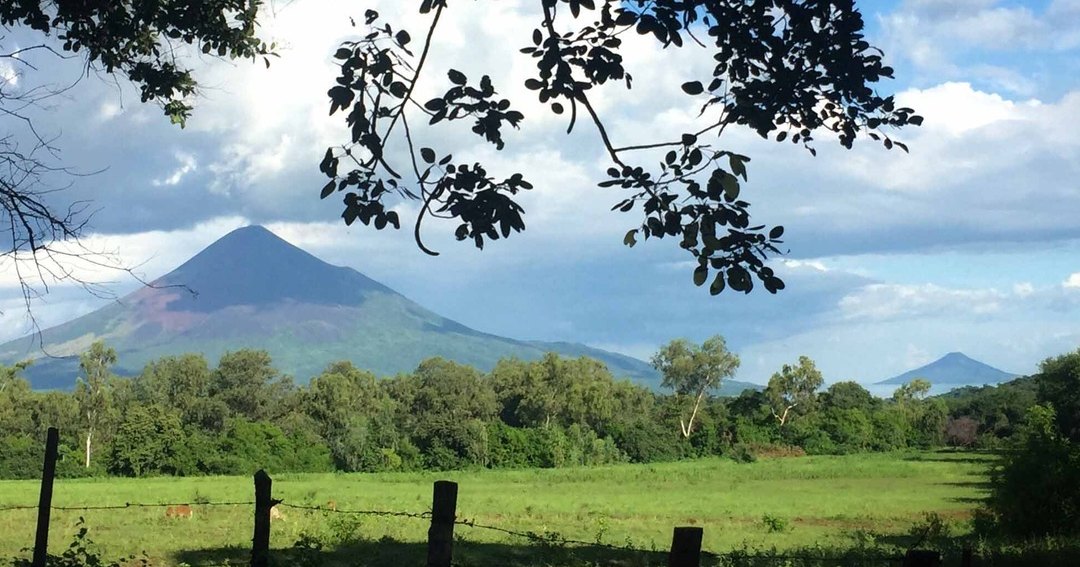
Then you climb it. Tickets for the rooftop are sold from a small window at the back of the cathedral, cost around US$4 for foreign visitors, and are cash only. The stairs come out onto a white, sun-bleached roofscape of domes and parapets where you can walk between the towers. On a clear day the Maribios volcano chain lines up along the horizon. Go early — by mid-morning the roof is genuinely hot underfoot, and there's no shade at all.
Museums, Market, and Shade
León's museums are small, cheap and close together, which makes them ideal for the hot middle of the day. The Museo Archivo Rubén Darío, in the house where the poet lived, is a quiet, bookish stop. Several other small museums and galleries sit within a few blocks of the central park — places where you're often the only visitor.
The Mercado Central is the other essential stop. It's a proper working market: fruit stalls, cheese, sacks of coffee, and a row of comedores at the back where local families eat lunch. This is where you find the food the city actually eats — carne asada with gallo pinto, fried cheese, fresh juice, cacao from the north. It's cheap and the best lunch in town. If you'd rather sit down, the streets around the Parque Central have plenty of cafés — Nicaraguan set lunches, good coffee.
If You Have a Little More Time
Two add-ons: Las Ruinas de León Viejo, the original colonial city, is a UNESCO World Heritage site on the shore of Lake Xolotlán with Momotombo volcano rising behind it — low stone foundations, explanatory plaques, and a lot of quiet. It needs transport and a couple of extra hours, so fold it into a full-day loop rather than the standard run.
The second is Cerro Negro, where you hike the black cone and slide back down on a board. It's a half-day tour, usually booked the day before, and it eats the afternoon — enjoyable, but it turns a relaxed city day into a full excursion.
Coming Home to the Quiet
The best part of the day is the drive back. You leave the heat and traffic behind, join the highway, and within the hour you're on the dirt road again — dust, dogs, surfboards against the walls, woodsmoke.
That contrast is the whole point of staying here. Casa Todo Bueno is a small, Canadian-run guesthouse a one-minute walk from the beach, with private rooms, en-suite bathrooms, and a quiet garden where the only sound after dark is the surf. Rooms start at US$45 per night, with optional air conditioning for US$8 more — a welcome thing after a day of walking on a white cathedral roof. Fast wifi, cold drinks and a hammock come free.
If you're planning a few days here with one of them spent in León, take a look at our rooms — and if you'd like help arranging a driver, just ask when you book. We'll point you at the people we use ourselves.
A Simple One-Day Plan
- 8:30 — breakfast in the village, fill a water bottle
- 9:00 — drive to León (about an hour)
- 10:00 — cathedral and rooftop before the heat
- 11:30 — one or two small museums near the park
- 13:00 — lunch at the Mercado Central
- 14:30 — coffee, plaza, a slow walk along the colonial streets
- 16:00 — start back
- 17:15 — sunset on the beach, one minute from your room
Bring cash in córdobas, a hat and sunscreen. Wear shoes for the rooftop, not flip-flops. And don't overplan it — León rewards wandering, and El Tránsito rewards coming back early.
Ready for a quiet base with a colonial city an hour away? Check availability at Casa Todo Bueno.
Planning a trip to El Tránsito? Book a room at Casa Todo Bueno — private en-suite rooms with air conditioning, one minute from the beach, from US$45/night.