What to Eat in El Tránsito, Nicaragua: Fresh Fish, Gallo Pinto and the Dishes Worth Ordering
El Tránsito doesn't have a food scene in the way a city does. It has something better for a hungry couple on a quiet beach: fishing boats that come in during the morning, a handful of kitchens that cook what's local, and prices that leave money in your pocket for the rest of the trip.
Eat here for a few days and you notice the rhythm. Breakfast is gallo pinto and coffee. Lunch is the big meal, usually fish. Dinner is slower, often with the sound of the surf a street away.
The fish comes in before lunch
The first thing to understand about eating on the Pacific coast of Nicaragua is that seafood is not a menu item here — it's the morning's work. Pangas come back to the dark sand in front of the village, and what's on the ice that day is what's worth ordering.
That means two things for you. First, ask what came in. Second, eat your fish at lunch, not late at night. By evening, the best of it is usually gone.
Gallo pinto: the breakfast that starts everything
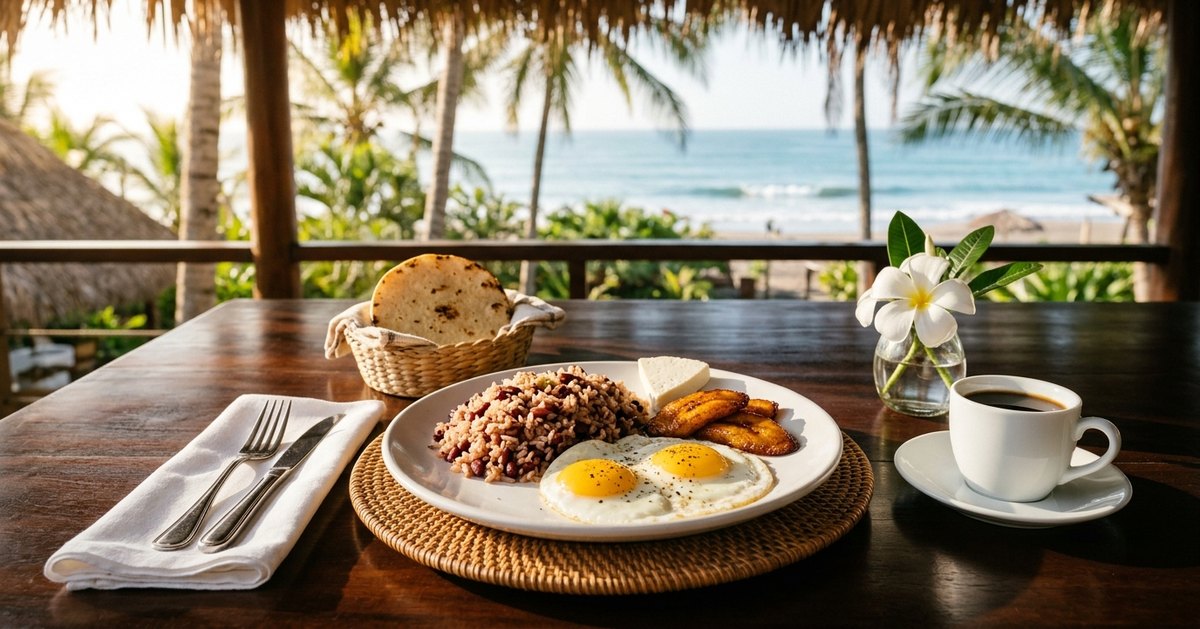
Rice and beans, fried together with onion and garlic until the beans stain the rice a deep brown. That's gallo pinto, Nicaragua's national dish, and it shows up at breakfast with eggs, a slab of fresh cheese, a warm tortilla and coffee that is stronger than you expect.
It costs very little, it fills you for a morning of walking the beach, and after three days you'll understand why Nicaraguans eat it at any hour. Try it with a little chilero — the vinegary chili sauce on every table — and a squeeze of lime.
Pescado frito, ordered whole
A whole fish, scored and fried until the skin crisps, served with rice, beans or salad, and tajadas — fried green plantain. This is the plate to order if you order one thing on the coast. Eat it with your hands if the fish is small, and don't skip the head; locals will tell you it's the best part.
From Casa Todo Bueno it's a one-minute walk to the beach, which means you can be standing where the boats land before the ice is even out.
Ceviche and shrimp, mid-afternoon
When the sun is at its hottest, ceviche is the answer: fish or shrimp cured in lime with onion and cilantro, cold and sharp and exactly right with a cold beer. Along the beach you'll also find shrimp cocktails served in a glass with tomato and lime — retro, cheap, and genuinely good after a swim.
The comedor lunch: the best value in town
A comedor is a small family kitchen with a few tables and a set daily plate — rice, beans, some protein, a bit of salad or plantain. In Nicaragua a full lunch at a comedor typically runs somewhere between three and eight US dollars, which makes it the cheapest honest meal of your day.
There is no menu to study. You ask what there is today, and you say yes. This is also where you learn what people actually eat, rather than what a restaurant thinks visitors want. Ask at Casa Todo Bueno which kitchen has the best fish that day — we eat at the same tables.
Quesillo, tajadas and street snacks
Quesillo is the snack to know: a soft, salty cheese wrapped in a warm corn tortilla with cream and pickled onion, eaten standing up, costing about as much as a coffee. Tajadas — thick fried plantain — turn up everywhere, often with a piece of fried cheese on top.
Nacatamal on a weekend morning
A nacatamal is corn masa filled with pork, potato and vegetables, wrapped in a banana leaf and steamed for hours. It's a weekend breakfast, a family thing, and heavy enough that you may not need lunch. If someone is selling them, buy one.
Vigorón and the inland classics
Vigorón — boiled yuca topped with cabbage salad and chicharrón — is more Granada than Pacific beach, but you'll find versions of it around. If you head to León, look for indio viejo, a slow-cooked corn and shredded beef stew that tastes like a Sunday.
What to drink
Fresh juice is the move: tamarindo, melón, rosa de jamaica, and on the coast, cacao — ground and served cold or hot, slightly bitter, nothing like the sweet powder back home. Beer is Toña or Victoria, rum is Flor de Caña, and both are cheap.
Practical notes for eating in El Tránsito
- Bring cash. There's no ATM in the village, so withdraw córdobas or US dollars in León or Managua before you arrive. Some places take cards; many don't.
- Lunch is the main meal. Plan your day around it, and eat fish early.
- Vegetarians are fine, with a little patience. Rice, beans, cheese, plantains, eggs and fruit are everywhere, but ask plainly — "sin carne" — and expect simple rather than elaborate.
- Tap water isn't for drinking. Bottled or purified water is easy to find.
- Prices are low, tips still matter. A small tip on a five-dollar lunch is real money to the family who cooked it.
A quiet place to come back to
After a long lunch, the pleasure of El Tránsito is not doing very much. Our rooms at Casa Todo Bueno are a one-minute walk to the beach and set back in a quiet garden, with a private bathroom, optional air conditioning for US$8 a night, and rooms from US$45. It's the kind of base where you can walk out for fish, come back for a hammock, and repeat.
Eating well here isn't about finding the trendiest table. It's about knowing what came off the boat, where the family kitchen is, and that a US$4 lunch can be the best meal of your week.
Ready to eat your way through a fishing village? See our rooms and check availability →
Planning a trip to El Tránsito? Book a room at Casa Todo Bueno — private en-suite rooms with air conditioning, one minute from the beach, from US$45/night.