Dry Season in El Tránsito, Nicaragua: What It's Really Like (November to April)
"Dry season" shows up in every Nicaragua travel guide. Here's what it actually means when you wake up in a small fishing village like El Tránsito — the weather, the beach, the water, and the small honest details nobody puts in the brochures.
When the dry season runs
On Nicaragua's Pacific coast the dry season runs roughly from late November through April. The green season takes over from about May to October, when the hills turn lush and the afternoon showers return. If you're planning a quiet beach stay for a couple, the dry season is the stretch most people picture: blue skies, dry roads, and evenings you can spend outside without watching the horizon.
What the weather actually feels like
Nicaragua's Pacific lowlands sit in the high twenties to low thirties Celsius (roughly 26–32°C) for most of the year, and the dry season is the most consistent part of it. Rain is rare — the odd early-November shower is usually the last of the wet season finishing up.
The months aren't all the same, though:
- December to February is the sweet spot for many visitors. Warm sunny days, a steady ocean breeze coming off the water, and noticeably cooler mornings and evenings. This is the version of the dry season people write home about.
- March and April build heat steadily, and April is typically the peak before the first rains break it. If you're travelling then, plan around the middle of the day rather than through it.
- Sea temperatures stay around 27°C (about 82°F) through the dry season, which means you can swim or wade for as long as you like without thinking about a wetsuit.
The beach at low tide
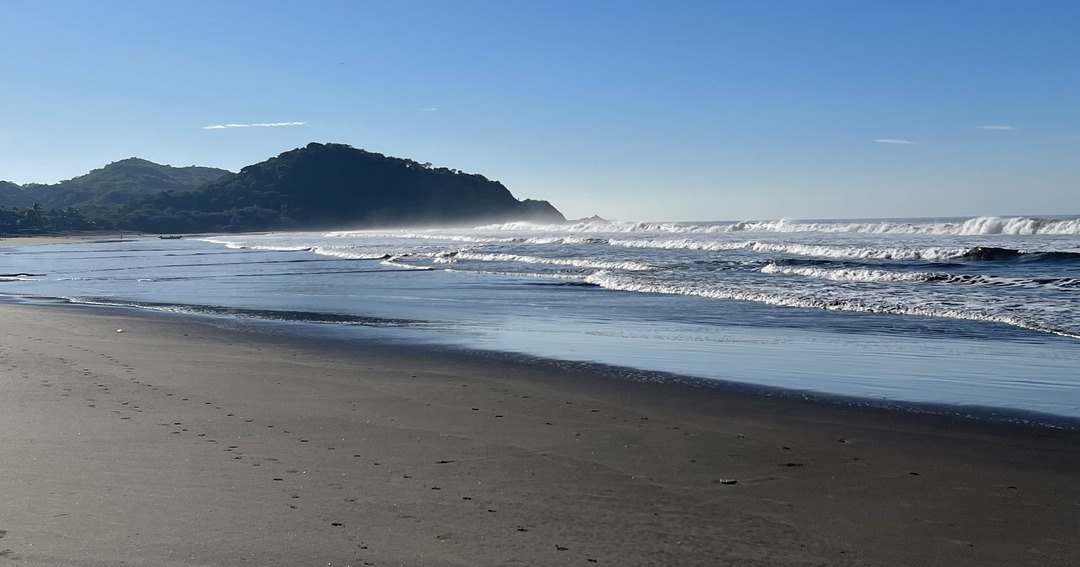
This is the part of the dry season that surprises people most. In El Tránsito, low tide opens up a wide, firm beach that goes on for a long way — the retreating water leaves rippled patterns in the sand and shallow pools that warm up beautifully in the sun. It's the best walking beach you could ask for, and the tide pools are gentle enough for a slow afternoon of exploring.
Because the sand is volcanic and dark, it heats up fast in the middle of the day. Mornings and late afternoons are when the beach is at its best: soft light, fewer footprints, and a shoreline that belongs to the fishermen heading out before sunrise and the village kids playing football after school.
A short word about the surf
Yes, people surf here, and the dry season is kind to learners: the waves are smaller, cleaner and more orderly than the big wet-season swell, with the reliable offshore winds this stretch of coast is known for. The larger, punchier swell arrives with the rainy season.
But you don't have to surf to love it here. Plenty of couples come for the water, the walking, the food and the quiet, and simply enjoy watching the waves instead. Surf is a nearby activity, not a requirement.
The honest bits
No season is perfect, and pretending otherwise helps nobody.
- The roads get dusty late in the dry season. It's part of life in a working village, and it's why the beach showers and a cool room matter more than you'd think.
- Holidays are busy. Christmas, New Year and Easter (Semana Santa) are the busiest and priciest weeks of the year across the coast. This is a real fishing village, not a resort strip, so accommodation is limited — book those weeks well ahead.
- Midday is hot. Do your walking, tide-pooling and exploring early or late, and treat the middle of the day as siesta time. That's what everyone local does.
Packing and planning for a dry-season stay
Bring sun protection you actually like wearing, a refillable water bottle, light long sleeves for the bright middle hours, and sandals you don't mind getting dusty. Plan your days in two halves: beach and exploring in the morning, shade and hammocks in the afternoon, dinner and a sunset walk in the evening. El Tránsito sits about 90 minutes from León and is a straightforward drive from Managua, which makes it an easy stop between the city and the beach.
It also helps to ask about air conditioning when you book. At Casa Todo Bueno it's a US$8-a-night add-on rather than something baked into the rate, so couples who run warm can have it and couples who don't can keep the price down.
Where couples stay in El Tránsito
This is where we come in. Casa Todo Bueno is a small, family-run guesthouse a one-minute walk from the beach, and the dry season is when the garden, the hammocks and the splash pool earn their keep. Every room has a private bathroom — en-suite, so no sharing down a corridor — and air conditioning is available as an optional add-on for US$8 a night. In March and April, most guests take it.
Rooms start at US$45 a night for two, with the larger casitas at US$55. There's a shared kitchen, strong WiFi if you're stretching your stay into a working week, free parking, and — the thing guests mention most — real quiet. No nightlife thumping next door, just the sound of the waves at the end of the road.
We're on the property, which means questions get answered by a person, tips come from people who actually live here, and you'll usually be pointed toward whichever beach shack has the freshest fish that day. Casa Todo Bueno takes bookings directly through our own site, so you're reserving with the people who live here — not a call centre.
Come see it in the dry season
The dry season runs from late November into April, and the stretch between New Year and Easter is the driest, sunniest part of it — which is exactly why those weeks fill first. If you're a couple looking for a clean, quiet, affordable room just a one-minute walk to the beach, we'd love to have you.
Check our rooms and availability →
Planning a trip to El Tránsito? Book a room at Casa Todo Bueno — private en-suite rooms with air conditioning, one minute from the beach, from US$45/night.