Nicaragua has more bird species than almost anywhere in Central America, and one of the quiet pleasures of a small Pacific village is that you don't have to go looking for most of them. They turn up. Sit in a garden for twenty minutes with coffee and the list starts writing itself.
This is a short, honest guide to the birds around El Tránsito — on the sand, in the estuary that runs out to sea at the edge of the village, and in the dry forest and gardens inland. Binoculars help, but they are not what stands between you and a good morning. Timing is.
On the sand: pelicans, frigatebirds and terns
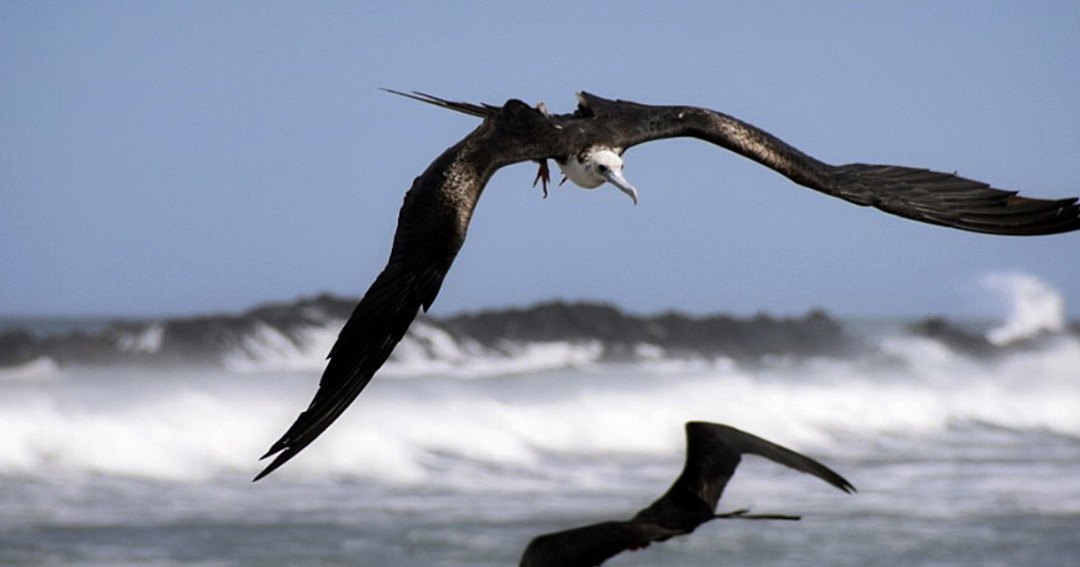
The beach is the easiest birding you will ever do, because the birds are working and you are not. From the gate at Casa Todo Bueno you're on the sand in a minute, which makes a sunrise walk about as low-effort as birding gets. Brown pelicans cruise low over the breakers in loose formation, then fold and drop from a height when they spot fish — the splash is usually your first clue they were there at all. Above them, magnificent frigatebirds hang almost motionless on the thermals, black and angular, watching everything.
At the water's edge the small stuff is the reward: sanderlings running the wet sand in a race with the waves, willets standing about looking slightly annoyed, turnstones picking at the tideline, laughing gulls and terns squabbling over the shallows. Walk at low tide and you'll see more birds than people, especially on a weekday.
Look for an osprey offshore too. They hunt this water all day, and a hovering dark shape above the swell is almost always one.
In the estuary: herons, egrets and kingfishers
The estuary that slips through the village and out to sea — the Estero Tibocoyo on the maps — is where the birding gets quieter and more interesting. Still water, mud, reeds and shade: exactly what a heron wants. Great egrets stand like statues until something small swims too close. Snowy egrets chase the shallows more busily. Little blue and tricolored herons work the edges, and in the reed beds you'll often find white ibis and, if you're patient, a roseate spoonbill sweeping its bill side to side through the water.
Kingfishers are the ones guests ask about most. Ringed kingfishers are big, chestnut-breasted and loud, and they fly low and straight along the channel. Belted and green kingfishers keep to the shaded banks. All of them are easiest at first light, before the heat and before the village gets moving.
Inland: dry forest and motmots
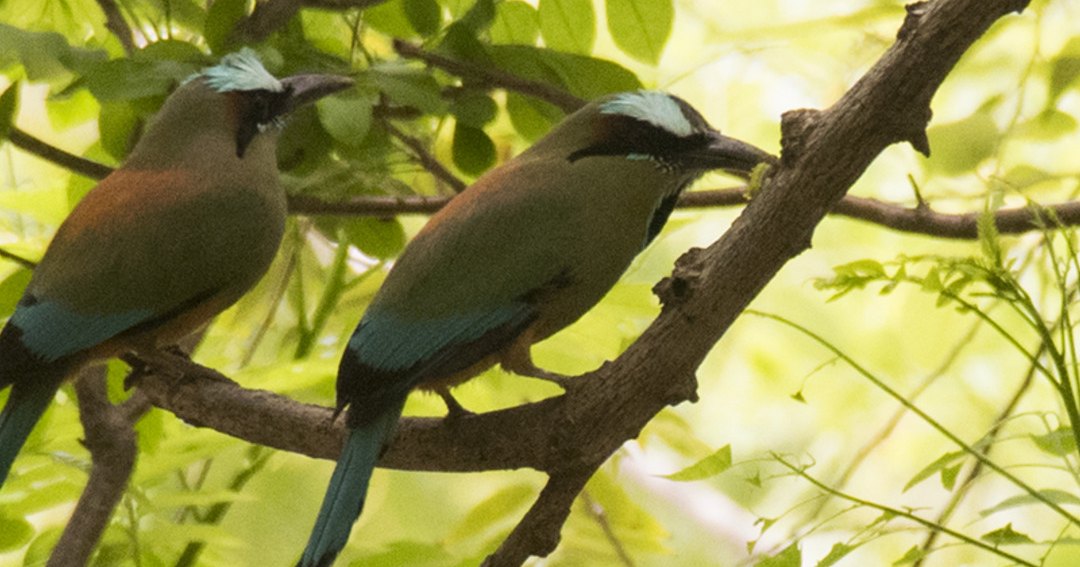
Head away from the water — up the road, through the trees behind the village — and the birds change completely. Dry tropical forest in this part of Nicaragua is full of colour, and the star is the turquoise-browed motmot, the guardabarranco, which is also the national bird. Two of them sitting on a branch look like they were designed by someone showing off: green body, blue-edged crown, a long tail with two feather tips left hanging like little paddles.
We see them in the trees around the house regularly, which never stops being a nice thing to happen during breakfast.
Other regulars inland: Pacific parakeets screeching overhead in pairs, all green and impossible to miss, groove-billed anis in the scrub, cinnamon hummingbirds at flowers, tropical mockingbirds and rufous-naped wrens making a fuss, Hoffmann's woodpeckers, and black vultures and crested caracaras doing the clean-up work villages need.
From the hammock: the garden list
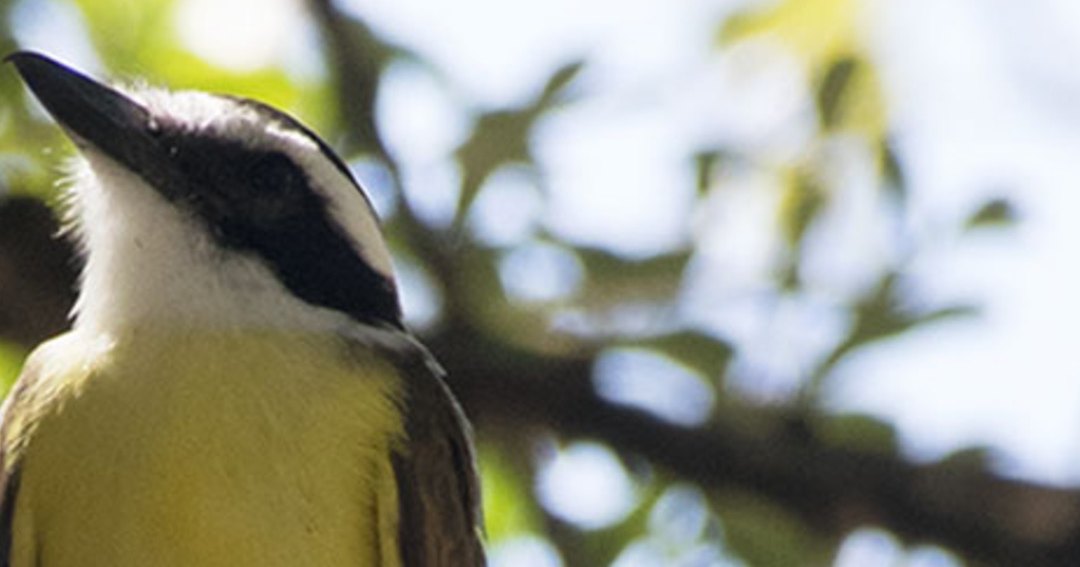
The garden at Casa Todo Bueno does a lot of the work for you — it's shaded, it's planted, and it's quiet, so birds come to it. The bird most guests learn first is the great kiskadee: bright yellow underneath, a black-and-white striped head, and a loud, insistent three-note call that sounds like its own name. It will sit on the fence and look at you.
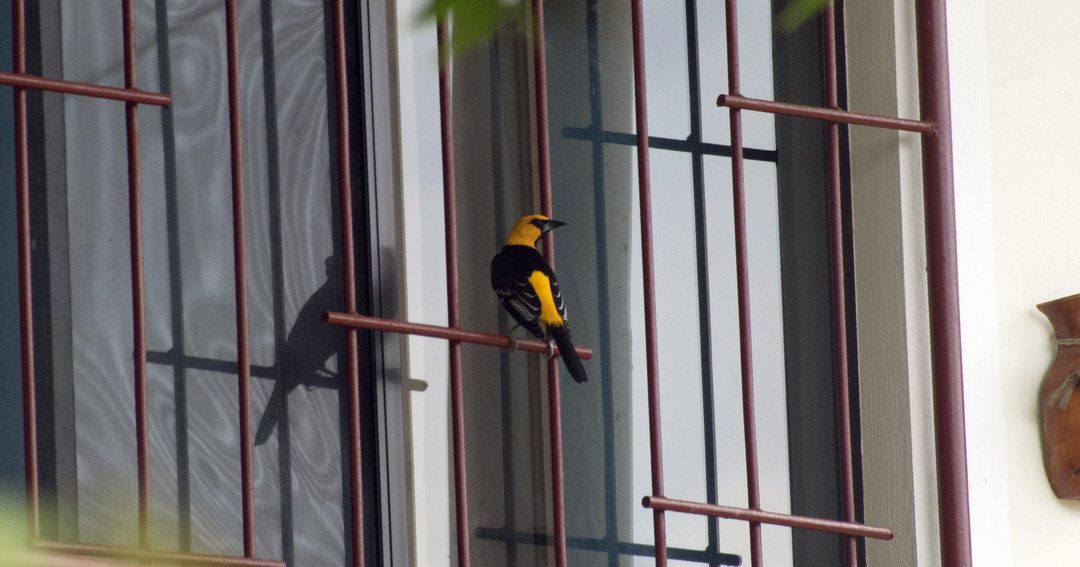
Add streak-backed orioles flashing orange through the leaves, social flycatchers, vermilion flycatchers on the wires, and the iguana that has claimed a particular tree.
We don't feed the birds — no feeders, no taped calls — because the garden does well enough on its own and the point is to watch what's actually here.
When to go, and what to bring
- Early. The first hour after sunrise is worth three hours at midday: the birds are feeding, the light is soft, and the beach is empty.
- Follow the tide. Shorebirds like the wet sand at low and mid tide. The estuary is best when the water is calm.
- November to April is the dry season, with clean horizons and a lot of northern migrants present — shorebirds, warblers, tanagers. The green season is greener, quieter and still full of birds.
- Binoculars if you have them, a hat, water and shoes you can walk in. That's the whole kit.
Birding from a base one minute from the sand
The advantage of staying this close is that a birding morning doesn't need a plan or a vehicle. You can be on the sand for sunrise, back for coffee and a shower, out to the estuary before the heat, and in the hammock by eleven with the garden list still ticking over. At Casa Todo Bueno you're a one-minute walk to the beach, in a quiet garden, in a private room with its own en-suite bathroom and optional air conditioning for US$8 a night. Rooms start at US$45.
We've been here since 2016 and we're always happy to point out where the motmots have been hanging about that week.
Bring binoculars, or come without them and borrow our patience. Have a look at our rooms to see what's free, or read about the tide pools and wildlife north of the village if you want another morning out.
Planning a trip to El Tránsito? Book a room at Casa Todo Bueno — private en-suite rooms with air conditioning, one minute from the beach, from US$45/night.